How to Talk to Clients About Vinyl Pool Liner Options
Apr 20th 2026
As a pool dealer, you've probably been there: a client points to the prettiest pattern in the book, picks the thinnest liner to keep costs down, and assumes that's all there is to it. The liner conversation is one of the most important ones you'll have, and one of the most misunderstood.
Clients don't need to become vinyl experts. But they do need enough context to make a confident, informed decision, and that's where you come in. Here's how to guide those conversations in a way that builds trust, sets expectations, and ultimately leads to happier pool owners.
Start With What They Can See, Then Go Deeper
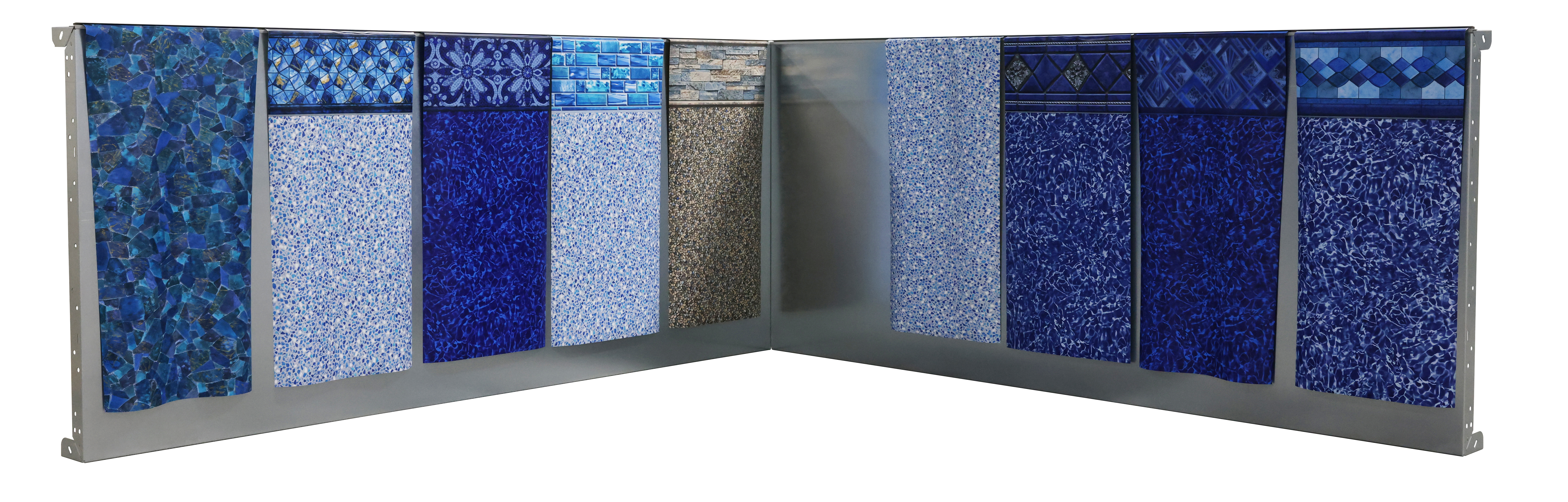
Most clients lead with pattern. That's natural, a liner's appearance is the first thing they notice and the easiest thing to picture in their backyard. Start there. Let them flip through options, talk about how color affects the look of the water, and find something they're excited about.
Once they've landed on a direction, that's your opening to shift the conversation toward what they can't see: the material itself.
A simple way to frame it:
"The pattern is what makes the pool look great on day one. The material is what makes it still look great in year eight."
That one line shifts the conversation from aesthetics to investment, without making the client feel like they made a bad choice.
Explain Thickness in Plain Language
Liner thickness is one of the most common points of confusion, and the terminology doesn't help. Two words get thrown around interchangeably: mil and gauge. They're not the same thing, and the difference matters.
Mil is a precise, standardized measurement. One mil equals 1/1000 of an inch, and it means the same thing regardless of who made the liner or where you bought it. Gauge has no universal definition in the pool industry. Different manufacturers use it differently, and some use it to describe warranty tiers rather than material thickness at all. That ambiguity is a problem for clients trying to make an informed comparison. When evaluating liners, always look for a mil specification. If a product is only listed in gauge with no mil equivalent, you don't actually know what you're buying.
Once you're comparing actual mil measurements, clients hear "20 mil" and "28 mil" and often assume the cheapest option is fine since it's "basically the same thing," or on the flip side, that the thickest option is automatically the best. Neither is quite right.
Thickness is one factor, but what's in the vinyl matters just as much, sometimes more. A well-formulated 20 mil liner will outlast a poorly made 28 mil liner. That's worth saying out loud to clients, because it shifts the conversation away from a simple numbers game.
That said, thickness does have real, practical value. A thicker liner offers more stretch tolerance during installation, which helps achieve a cleaner, wrinkle-free fit. It also adds an extra margin of protection against punctures from sharp debris or accidental scrapes during cleaning, something worth considering for households with kids, pets, or heavy pool use.
The best recommendation isn't one-size-fits-all. A client who wants a long-lasting liner at a smart price point may be perfectly served by a 20 mil option built from high-quality vinyl. A client who wants every possible layer of durability, or has a pool that sees a lot of activity, might feel better going thicker. Your job is to ask the right questions and match them to the option that actually fits their situation.
The key message: it's not just about how thick it is. It's about what it's made of. Both matter. That's why it's worth understanding what goes into the vinyl itself.
Talk About What's in the Vinyl — Not Just How Thick It Is
Thickness matters, but it doesn't tell the whole story. Two liners can be the same mil thickness and perform very differently depending on how the vinyl itself is formulated.
When talking with clients, a few formulation factors are worth mentioning in plain terms:
- UV inhibitors: These are blended directly into the vinyl to slow down sun-related fading and brittleness. A liner without strong UV protection can look worn out in just a few seasons, regardless of thickness.
- Cold crack resistance: In climates with cold winters, low-quality vinyl can become brittle and crack during off-season storage or early spring installs. A well-formulated liner stays flexible even in low temperatures.
- Filler content: Some manufacturers cut costs by loading the vinyl mix with fillers, and one of the most common is calcium carbonate, a chalk-like powder that's cheap to source and easy to blend in. The problem is that calcium carbonate makes the vinyl stiffer and more brittle over time. It reduces the material's elasticity, which means the liner is more likely to crack, shrink, or fail under stress, especially at seams and corners where the material is working hardest. Filler-heavy liners also tend to degrade faster when exposed to pool chemicals and temperature swings. The higher the filler content, the shorter the liner's useful life, and the more likely you are to get a callback.
- Virgin vinyl: Quality liners start with virgin vinyl, raw, unrecycled PVC that's never been processed before. Recycled or blended vinyl can introduce inconsistencies in color, flexibility, and strength that aren't visible at first but show up over time. Virgin vinyl gives manufacturers precise control over the final product, which means more consistent performance from liner to liner and year to year.
You don't need to go deep into chemistry with clients. A simple framing works well:
"Not all vinyl is made the same way. We source ours specifically to hold up against sun, cold, and pool chemicals over the long haul."
Why ‘Made in the USA’ and Sole-Sourced Vinyl Matter
Where a liner is made, and where its vinyl comes from, has a real impact on quality and consistency. It's a conversation worth having with clients who care about what they're putting in the ground.
Some liner manufacturers source vinyl from multiple suppliers, often to cut costs or navigate supply chain challenges. The problem with that approach is inconsistency: when the vinyl formulation changes from batch to batch, so does how the liner performs, installs, and holds up over time.
Sole-sourcing vinyl, meaning one trusted supplier every time, eliminates that variable. It means every liner is made from the same formulation and delivers predictable, reliable performance. For dealers, that translates to fewer surprises on the job. For clients, it means the liner they buy today will perform the same way it does five years from now.
Manufacturing in the USA adds another layer of confidence. Domestic production means tighter quality oversight, shorter supply chains, and accountability that's harder to maintain when materials are crossing borders.
A simple way to frame it for clients:
"This liner is made in the USA, from vinyl that comes from one source every single time. That consistency is part of what makes it perform the way it does."
Use Industry Standards as a Trust Signal
Clients are increasingly savvy, and many will ask, or at least wonder, how they know the liner they're buying is actually quality. This is where industry standards become a useful tool in your sales conversation.
The Chemical Fabrics and Film Association (CFFA) maintains CFFA-P-101, the recognized minimum performance standard for in-ground vinyl pool liners. Certification under this standard requires third-party lab testing across key performance categories, including UV resistance, low-temperature flexibility, and material integrity.
You don't need to recite the standard by name, but you can use the concept simply:
"The liner we're recommending uses vinyl that's been tested and certified to meet industry performance benchmarks. It's not just a manufacturer's claim, it's verified by an independent lab."
That kind of third-party validation resonates with clients who've done any research at all, and it gives hesitant buyers one more reason to feel confident in the upgrade.
Handle the Price Objection Proactively
The most common pushback dealers face is simple: "Can we just go with the less expensive option?" The best way to handle this isn't to defend the premium; it's to reframe what the premium actually represents.
A few approaches that work:
- Replacement cost: Liner replacement isn't just the cost of the liner. It's labor, water, chemicals, and the disruption of having your pool out of service. A liner that lasts longer avoids all of that.
- Annualized cost: Spread the cost difference over the life of the liner. A modest difference upfront often works out to a very small annual premium, sometimes just a few dollars a month.
- Peace of mind: For most homeowners, their pool is a significant investment. A quality liner protects that investment, and protects you from callbacks.
Ultimately, most clients are not resistant to quality; they're resistant to feeling upsold. When you frame the conversation around their long-term experience rather than the product, the decision usually takes care of itself.
Set Expectations Around Care and Lifespan
One of the best things you can do for a client relationship is set realistic expectations before installation, not after a problem arises. Even the best liner requires proper care to reach its full lifespan.
Key points to cover before the install:
- Chemical balance: Improperly balanced water, especially low pH or excessive chlorine, accelerates vinyl degradation faster than almost anything else.
- Cleaning practices: Abrasive brushes and sharp tools can damage the surface coating. Remind clients to use soft brushes and avoid dragging equipment across the liner.
- Water level during off-season: Letting water levels drop too low during winterization puts stress on the liner and can cause shrinkage or cracking.
Giving clients this guidance upfront positions you as a trusted advisor, not just a vendor. And it significantly reduces the chance of a frustrated call a year or two down the line.
The Only Alpha Advantage
At Only Alpha Pool Products, we engineer our liners to give dealers exactly this kind of confidence. Our vinyl is sole-sourced exclusively from Continental, CFFA-P-101 certified, and formulated with the UV inhibitors, cold crack resistance, and filler-free consistency that holds up in real-world pool environments, year after year.
When you recommend an OAPP liner, you're not guessing. You're backed by a product built to perform, and a partner invested in helping you have better conversations, close more confident sales, and build longer-lasting client relationships.
Because the best liner conversation isn't about selling up. It's about helping your clients make the right choice.